

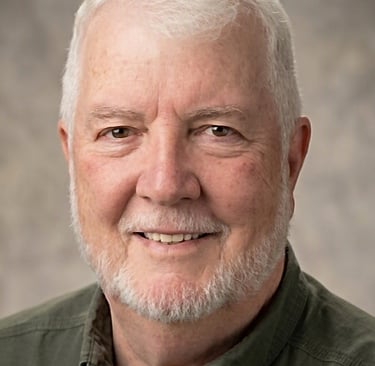
Jim Willis
Keynote Speaker, Presenter, and Trainer
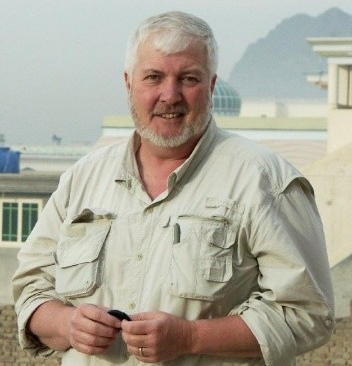
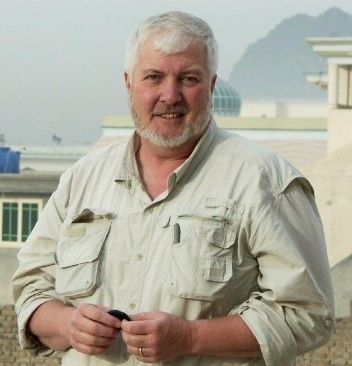
Jim Willis brings over four decades of experience across 43 countries and high-risk environments worldwide.
He has addressed government bodies, executive leadership, and key stakeholders across Europe, Asia, Africa, and South America.
His presentations equip audiences with clear thinking and practical tools they can use the moment they leave the room.
Jim handles complex subject matter with clarity and a well-placed lightness that makes difficult topics accessible and memorable.
If you are looking for a keynote speaker who delivers substance, commands a room, and leaves a lasting impression, you are in the right place.
Resilience is not a theory. It is a decision.
"Jim Willis is a powerhouse presenter. From the moment he begins, he commands the room with an incredible depth of knowledge. He doesn't just present information; he makes it engaging, clear, and authoritative. A true expert."
Nick Leonardi, VP, UBM, Inc.
iP Utility Safety Conference & Expo - May. 2026


About Jim
Jim Willis is not your typical speaker. He is a proven authority whose expertise was built in the field across more than 43 countries, conflict zones, and high-consequence environments where the cost of getting it wrong was never abstract.
With over four decades of experience operating at the intersection of security, resilience, and leadership, Jim brings a unique perspective that no classroom alone can produce, and no credential can fully capture.
He has spent his career studying how organizations and societies survive disruption, recover from failure, and build the capacity to keep functioning when conditions turn against them. His work has taken him from domestic boardrooms to international crisis environments, advising executives, government clients, and organizations that cannot afford to get resilience wrong.
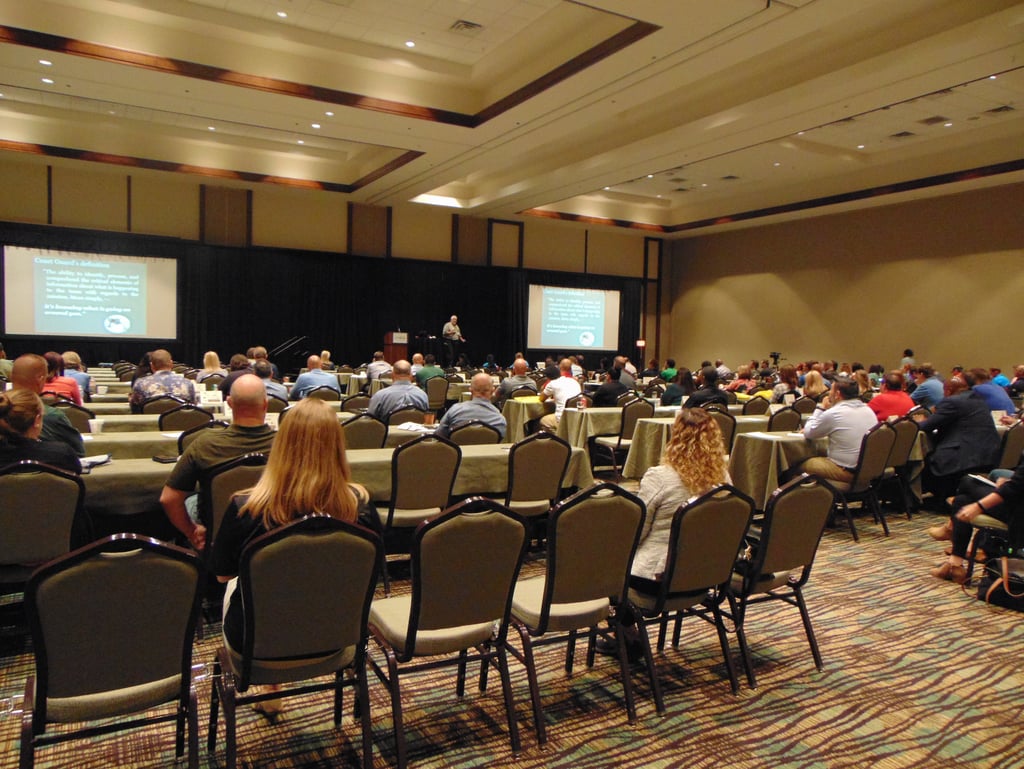
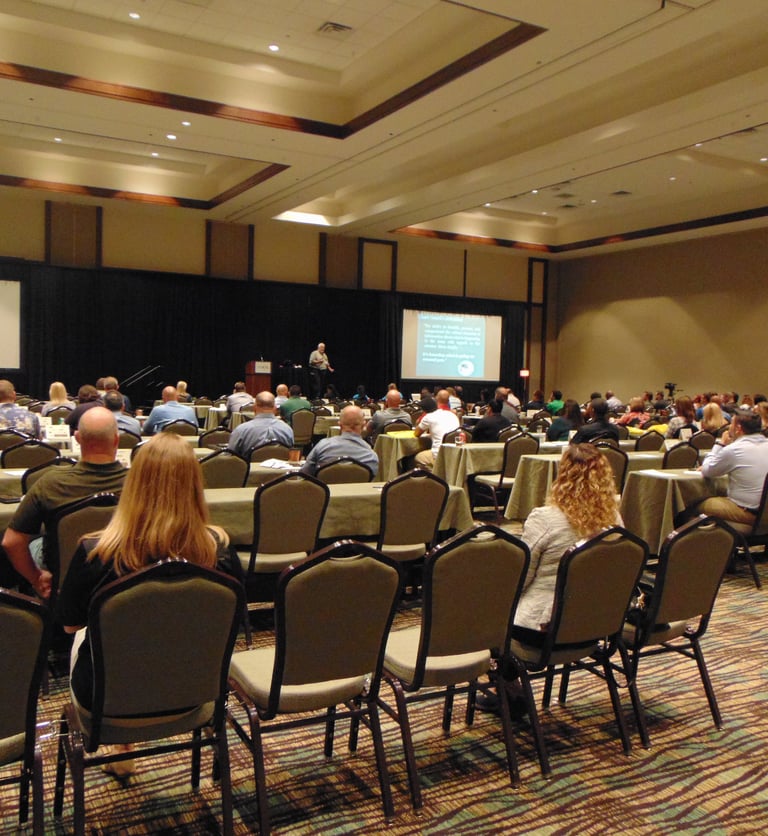
On stage, Jim translates that experience into clear, compelling presentations that move audiences from awareness to action. Complex topics become accessible, and strategic challenges become decisions. Whether addressing a technical audience or a general leadership forum, Jim reads the room and delivers content that resonates.
What distinguishes Jim as a keynote speaker is the rare combination of genuine field authority and the ability to make it matter to the people in front of him. A measured Southern cadence and an instinct for when to let the room breathe give his presentations a quality that is hard to define but easy to remember. His minimalist multimedia approach keeps the focus on substance and story, ensuring that audiences leave with practical takeaways they can apply.

Keynote Presentations
Jim delivers three signature keynote presentations. Each is built on field-tested experience and designed to move audiences from awareness to action.
Building Sustainable, Durable Organizations
Leadership, Awareness, and Resilience: The Keys to Securing the Unsecurable
What Do You Do When the Plan Fails?
Resilience by Design
Building Sustainable, Durable Organizations
On a Sunday evening in October 1980, south of Climax, Georgia, my plan ended. I was a second-generation lineman, the youngest line crew foreman at a small rural electric cooperative, a Navy veteran with a clear path and a good reason to stay on it. Then a section of a dead pine tree lodged high up on a power line snapped without warning and struck me in the face. Then there were the months of recovery. The permanent scars. And a plan that no longer existed.
I was 38 before I ever set foot in Washington, DC, and I had never planned on working in 43 countries. I hadn't planned on night school, an engineering degree, or the Master's that came later. I had never conceived of the possibility I would advise governments and organizations on three continents. None of it was in the plan. These are all the result of a decision made after that plan evaporated.
What decades of field experience across 43 countries, and more than a few active conflict zones and high-consequence security environments, has confirmed is this: the organizations and individuals that endure disruption are not the ones with the best plans and operations. They are the ones that made a deliberate decision to build something that holds together when the plan falls apart. Resilience is not discovered in the wreckage. It is designed before you get there.
That is what this keynote is about. Not recovering from adversity. Not finding strength in difficulty. But the deliberate, pre-crisis architecture of resilience — at the organizational level, at the leadership level, and at the individual level — that keeps a manageable disruption from becoming an irreversible one.
Drawing on the PACE Resilience Framework and four decades of operational experience across utilities, government, and international crisis environments, Jim Willis delivers a clear-eyed case for why resilience has to be built by design, what that design actually requires at the leadership and governance level, and what decisions need to be made now — before the Sunday evening that changes everything.
Participants leave with a clear understanding of why plans alone create fragility rather than strength, what genuine organizational resilience requires at the leadership and governance level, and a field-tested framework they can begin applying before the next disruption arrives uninvited.
Best suited for: Executive leadership conferences, organizational and governance forums, utility and infrastructure leadership, any audience responsible for continuity under pressure
What Do You Do When the Plan Fails?
Every organization, person, and parent has a plan. It may be elaborate and color-coded with tabs and appendices, or sketched on a napkin. But at some point, every plan meets reality, and the plan evaporates. A supplier doesn't arrive, the system goes down, or weather refuses to cooperate. The crisis arrives on a Saturday night with no warning and no script. And in that moment, the carefully constructed plan or the one on the napkin is gone; so, now, what do you do?
Theodore Roosevelt said it plainly: in any moment of decision, the best thing you can do is the right thing. The worst thing you can do is nothing. What he understood, and what four decades of field experience across 43 countries has confirmed, is that when the plan evaporates, the people who succeed are not the ones with the best plan. They are the ones who decided beforehand to be ready for the moment when the plan ran out.
That is what this keynote is about — the resilience to succeed when the thing that you never believed could happen, happens.
The takeaway is simple. Planning is essential, but success requires resiliency. This session shows you what comes after the plan.
Best suited for: General audiences - Anyone who has ever had a plan meet reality
Well, That's Not How I Planned It
There are places in this world where you cannot survey a power line or perform routine maintenance until a de-mining team has walked the road and the route ahead of you. Places where the infrastructure is critical, the need is real, and the threat is literally buried in the ground between here and the next tower. You cannot monitor the entire line. You cannot protect what you cannot see. And the work still has to get done.
That is the infrastructure security paradox. Critical infrastructure is open, distributed, and operationally dependent on accessibility. Those same characteristics make it structurally resistant to conventional security approaches. You cannot lock down what has to remain open to function. And yet the consequences of getting it wrong — for communities, for economies, for national security — are severe and in some cases irreversible.
The paradox is not overseas. It is here. The 2013 sniper attack on PG&E's Metcalf substation proved that. Gunmen damaged 17 high-voltage transformers, caused over $15 million in losses, and walked away without a single arrest. By 2022 the threat had broadened beyond bulk transmission systems to every utility in the country. Detailed operational guides began circulating on encrypted channels that year, specifically targeting smaller, isolated, and rural infrastructure as the softest and least protected points in the system. No utility is too small to be a target. No sector is out of bounds. Electric, water, wastewater, gas, telecommunications. If society depends on it, it is on the list. That changes everything about how this industry has to think about security.
In Malawi, transmission towers were collapsing. The World Bank brought Jim Willis in to find out why. Local villagers were dismantling the lower support beams to use as bed frames and tools. The lines ran through their territory but delivered no electricity to their communities. No security assessment had identified the threat because no security assessment had asked the human question. A few solar powered lights per village solved the problem completely. The threat disappeared because a leader made a decision that no security technology could have made. That is the first key. Leadership defines whether the right questions get asked before the wrong assumptions get built into the security posture.
Awareness is the second key. On that same trip, a right of way crew fled when a lion appeared on the right of way. On the return, a tsetse fly entered the cab. The driver bailed from a moving vehicle. His passenger jumped into the driver's seat and brought the vehicle to a stop. Two threats. Two correct decisions. Two survival calls made without hesitation. By the way — the tsetse fly followed the driver out the door. Neither threat was in the threat assessment. You can make the right call and still have the threat follow you. That is why awareness alone is never enough, and why resilience has to already be in place before the moment arrives.
Resilience is the third key, and it is third deliberately. The PACE Resilience Framework (Primary, Alternate, Contingency, Emergency) provides the operational architecture for infrastructure that holds under pressure even when it cannot be fully protected. But it only works when leadership has asked the right questions and awareness has built the right picture. This keynote delivers all three in the right order. Leadership first. Awareness second. Resilience third. Because that is the only sequence that actually secures the unsecurable.
Best suited for: Utility and infrastructure leadership, cooperative boards, government and regulatory audiences, executive leadership conferences, any organization responsible for critical infrastructure that cannot afford to get security wrong.
Leadership, Awareness, and Resilience: The Keys to Securing the Unsecurable
The Infrastructure Security Paradox
"Since you have been there and done that, our outside guys could relate to what you were saying. You did an outstanding job, and it was what I was expecting and even more."
Trey Teaff, CEO/General Manager
Wood County Electric Coop
Education
MSc International Development & Security Hope International University
BS Electrical Engineering Georgia Southern University
Certifications
Homeland Security Expert - Level V (CHS-V) American Board of Certification in Homeland Security
Security Risk Management Professional, Regional (SRMP-R) International Security and Safety Association (INSSA)
Book Jim for Your Event
"If you are looking for a speaker who is reliable, professional, and who will provide a smooth operational experience for your event staff, I highly recommend Jim Willis."
Gillian Saul, Client Services and Operations Manager
Bellatrix Consulting Group